Creating a sustainable company is about creating a sound and future-proof company. We are convinced that the best way to achieve truly sustainable development in the Group is to integrate sustainability throughout the whole value chain and especially within main sustainability areas. Sustainability is not something extra we do, but it should be embedded in everything we do from the way we act (Code of Conduct and Code of Conduct Business partners) to the way we produce and what products we develop.
We will achieve this by:
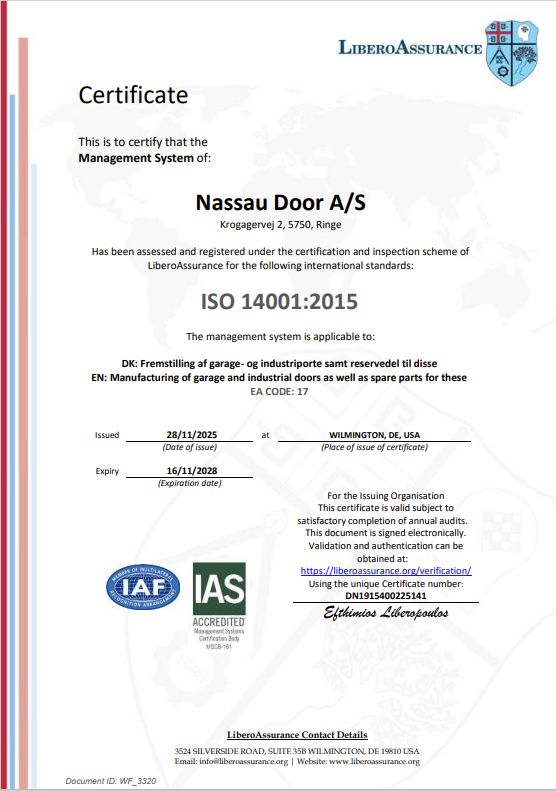
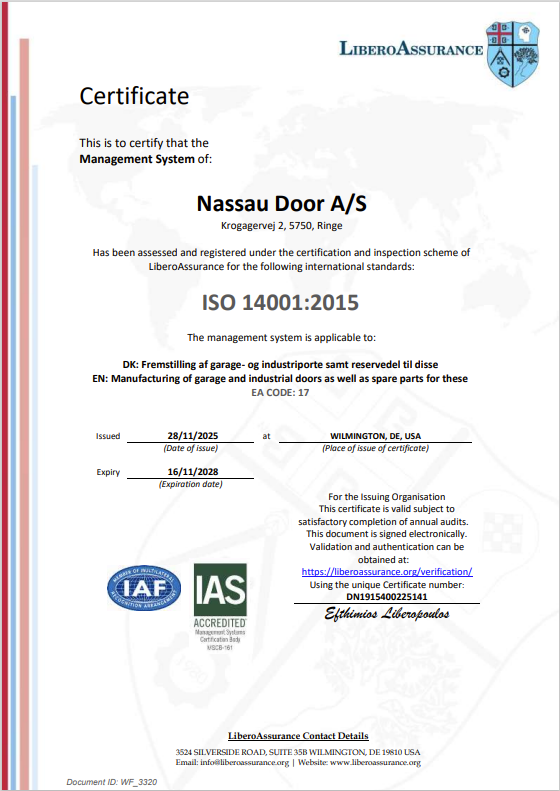
We are proud to announce that NASSAU’s production is now ISO 14001:2015 certified – an internationally recognised standard that documents our systematic and responsible approach to managing our environmental impact.
ISO 14001 ensures that we have a structured environmental management system in place, enabling us to reduce our environmental impact, work strategically with resource optimisation and continuously improve our processes.
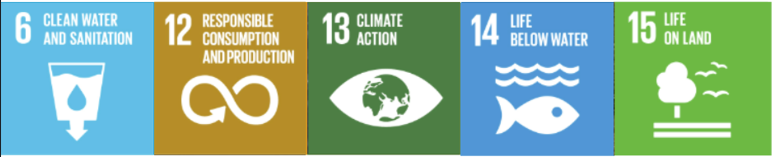
ISO 14001 plays a key role in supporting the United Nations Sustainable Development Goals by helping companies minimise their environmental impact and integrate sustainable solutions into their operations. This standard particularly supports the following goals:
Goal 6, Goal 12, Goal 13, Goal 14 and Goal 15 – which you can read more about here.
To achieve the certification, we have mapped our environmental impacts and defined clear environmental objectives, implemented procedures and workflows that strengthen our environmental efforts, and completed an external audit in which our system was assessed and approved.
The ISO certification is your assurance that NASSAU operates professionally, in a documented and sustainable manner – from production to delivery. It strengthens both the quality of our solutions and our responsibility towards the environment.
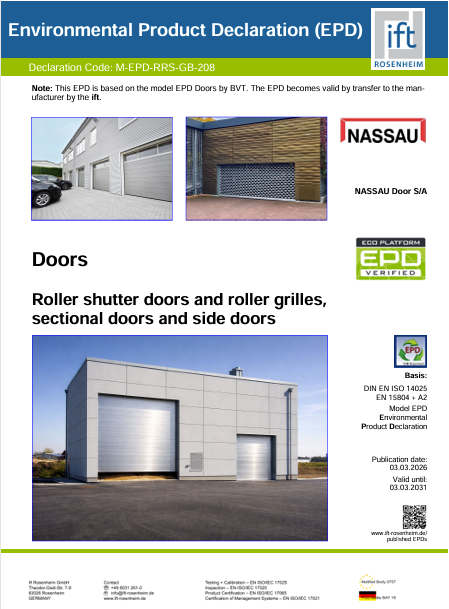
NASSAU has obtained an independently verified Environmental Product Declaration (EPD) for our roller doors, sectional doors and side doors. An EPD is an official environmental declaration that documents a product’s total environmental impact throughout its entire life cycle – from raw materials and production to use, maintenance and recycling.
The EPD has been prepared by ift Rosenheim, one of Europe’s most renowned institutes for testing and certification, and follows international standards such as EN 15804 + A2 and ISO 14025. This means that all data is third‑party verified and can be used in sustainability certifications such as DGNB, BREEAM and LEED.
The EPD provides full transparency on the key environmental parameters of NASSAU doors:
Material composition of aluminium, steel, insulation, motor and electronics
CO₂ footprint per m² across the entire product life cycle
Energy consumption during production and operation
Reference service life of 30–50 years depending on product type
Recycling potential of metals and other materials
Disposal and reuse at end of life
All data is based on actual 2024 production figures and verified by an external expert.
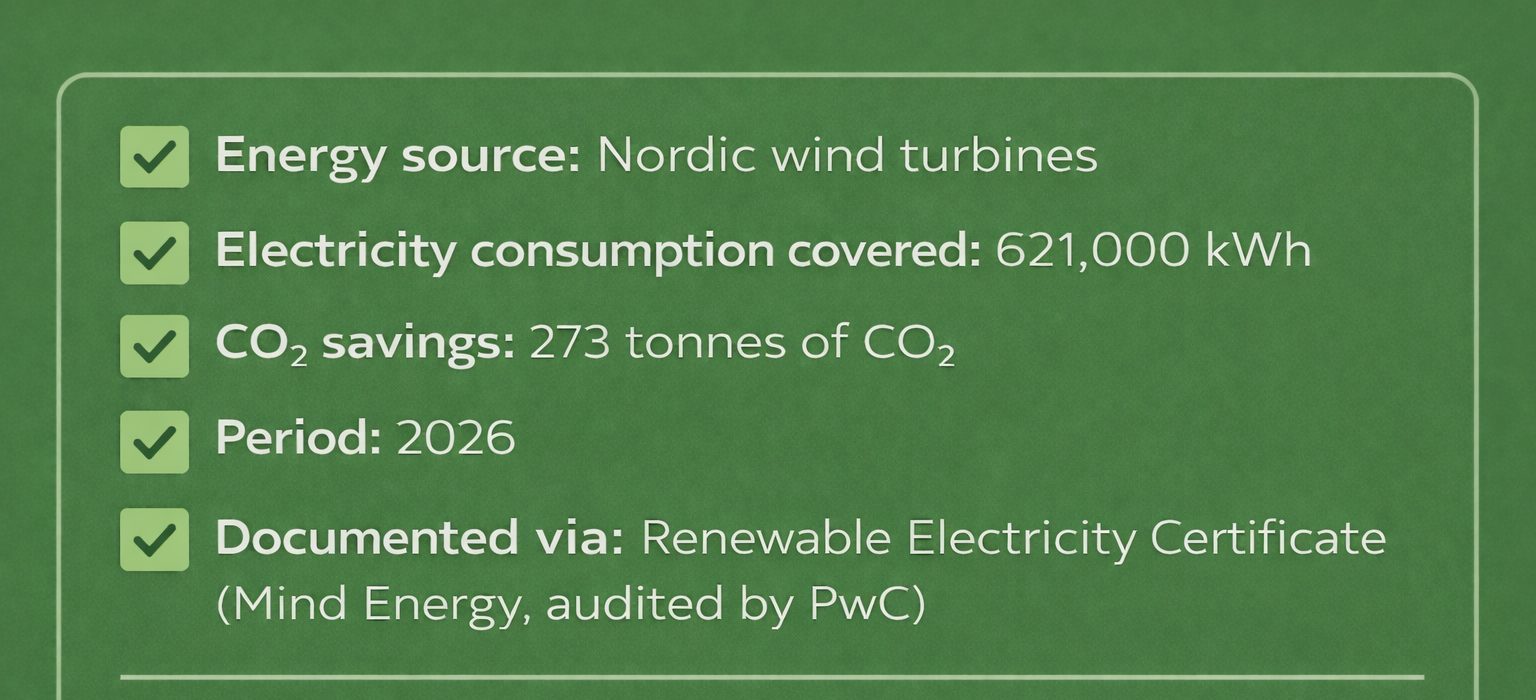
Our electricity consumption is covered by 100% renewable electricity from Nordic wind turbines, documented through certified Guarantees of Origin. A concrete choice that contributes to a CO₂ reduction of 273 tonnes and supports responsible operations.
Through certified Guarantees of Origin from Nordic wind turbines.
At NASSAU, we have chosen to cover our entire electricity consumption with renewable electricity through certified Guarantees of Origin.
This means that a corresponding amount of electricity is produced from renewable energy sources-primarily Nordic wind turbines-matching our total electricity consumption.
For 2026, this corresponds to 621,000 kWh, enabling us to report 0 g CO₂ per kWh from electricity consumption using the market-based method.
The purchase of Guarantees of Origin does not mean that all electricity is physically supplied directly from wind turbines to our locations. It means that our electricity consumption is documented as being covered by renewable energy production elsewhere within the Nordic power grid.

 UK
UK
 Germany
 Denmark
 Belgium
 Norway
 Netherlands
 Sweden